Few
weeks back my friend Prof. Rajan Pandey suggested that couple of his
students from Christ College in Bangalore pursuing B.A. in Political
Science may like to interview me for their thesis to be submitted for
the degree.
One of the Students was working on "Russia and India Defence and Nuclear Cooperation".
1. Where does India and Russia stand
in nuclear and defence sector?
Answer: I interpret this
question as current status about their relationship in these sectors. I will
add Space as well. Historically erstwhile USSR and current Russia has shared a
deeper relationship with India that has stood the test of time despite major
upheavals and transformations of the world. End of cold-war with the demise of
USSR and emergence of a Uni-polar world created India’s economic liberalization
in the 1990s that has catapulted Indian economy to one of the leading economies
of world that are growing rapidly. India has been collaborative nation and has
historically leaned towards USSR when it comes to its strategic needs –
including missiles, nuclear, defence and space programmes. World order is going through a re-polarization
now and there can be multiple ways the world may evolve. In the last two
decades, India responded to US based uni-polar world by participating in Russia,
India, China (RIC) grouping. As China became more assertive and USA has taken a
view of India being a friend to respond to China, we started working on the
QUAD grouping, that has not been as clear in its response to Xi’s Belt and Road
Initiative of 2013 (Please see my article http://www.indiandefencereview.com/news/the-chinese-twin-silk-roads-can-india-shake-off-its-lethargy/). India will continue to have string relation with Russia
in my opinion in all the key critical sectors – Defence, Nuclear and Space, as
the best strategy is to self-interests based multi-alignment in the re-polarizing world (please see my article http://www.indiandefencereview.com/news/triad-vs-quad-indian-geopolitical-options-as-a-twin-vertex/).
2. Russia and India have shared
years of friendship and cooperation, do you think it will still continue or
diminish over time?
Answer: It will continue and evolve as the world re-polarization
continues to take shape. (please see the Rand report https://www.rand.org/pubs/research_reports/RR2797.html). In all the possible future scenarios (except perhaps in (e)) – (a) Uni-polar world
under US (b) Uni-polar world under China (c ) Multipolar world (d) Chaos between
nation states ( e) Withering away of nation states and emergence of Identity
based (religious, ethnic, commercial) entities, India and Russia will continue
to find continued and meaningful value in their friendship, although it may
become more collaborative. Example, the way Brahmos Missile has been developed
by India and Russia together under the MTCR umbrella that west (read US)
created.
3. Views on defence & strategic
decision making for the $5 Trillion Indian Economy?
Answer: For my views you can read the following articles
At Uday India
At IDI
At IDR
(f) http://www.indiandefencereview.com/news/winning-the-asymmetric-wars-matrix-of-instruments-of-war/
(h) http://www.indiandefencereview.com/news/can-india-create-the-next-revolution-in-military-affairs/
(i) http://www.indiandefencereview.com/news/needed-ministry-of-intelligence-foresight-and-design-mifd/
4. Russia and India signed a
contract for the supply of five S-400 missiles, and India went for it despite
the open opposition of the United States. How is the implementation of the
contract going when the first S-400s reach India?
Answer: I interpret this
question as how will India deploy these Systems. Well, we have Pakistan and
China as our major air threats. China already has received and deployed two
regiments of S400 (please see https://thediplomat.com/2019/07/russia-kicks-off-delivery-of-chinas-second-s-400-air-defense-regiment/)
.
India will have to balance its
Trimpf deployment with respect to the quantum and quality of air-threats from
China and Pakistan.
With the recent announcement by new
Chief of Defence Staff (CDS) in terms of creation of an integrated Air Defence
command, it remains to be seen how these will be commanded (under army or
airforce or under a new command).
5. How does Russia’s relationship
with other countries have an impact on India’s nuclear and defence sector?
Answer: I think both
countries are wise enough to understand the ground realities of repolarizing
world. There are checks and balances and definite strategic messaging and
communication from all actors regarding the realignment. For example, rumors of
Pakistan receiving Su-35 (https://economictimes.indiatimes.com/news/defence/russia-pakistan-ties-to-remain-quite-limited/articleshow/57029179.cms?from=mdr).
Russia currently has two key export levers – Arms and Oil. India is heavily
invested in Russian arms. Both countries are in a historical binding
relationship that will endure even though Russia will have China (PLA
especially) its customer and potentially Pakistan as well. But, India also has
a stronger leverage to opt for other partners. My view is we will see more and
more collaborative development between Russia and India as also Russia and
China as well.
6. Views on the defence and nuclear
deals; and how did it evolve overtime and what value it holds to acquire
India’s growth in these sectors?
Not sure about this question. India
has been a most responsible nuclear power since it showed its capability in
1974 Peaceful Nuclear Explosion (PNE). The updated Nuclear deal with US where
US will be building 6 nuclear power plants in India is welcome for rapidly
emerging power needs of the country. India has done well to wriggle through the
2008 deal and luckily with Westinghouse declaring bankruptcy, India-US will
work together to build the nuclear power plants. Secondly, we will have these
power capabilities without losing our strategic freedom to opt to develop
nuclear weapon capability.
7. What should India do today? Are
there any action plan to explore innovation potential in the defence sector?
Kindly read my article https://udayindia.in/2020/02/12/the-15-dimensional-national-security-for-5-trillion-economy-a-wicked-problem/
8. Can you throw some light on the
modes to evaluate these military transformations? (Models/Research papers)
There are umpteen references without
any specific silver bullet. The Military Technology Revolution (MTR) was coined
by USSR in 1980s that became Revolution in Military Affairs in 1990s and
Military Transformation in 2010’s. Profound change is affected by new
technologies. Please see
also read my article http://www.indiandefencereview.com/news/responding-to-war-and-warfare-in-the-sixth-wave-of-innovation-2020-2045/
9. “India was faced with a difficult
task of re-orientation of its foreign policy conduct worldwide, after the
collapse of Soviet Union.” Can you review the problems that India faced during
that period and if there were any major impact on the India’s nuclear and
defence sector?
In 1990s India was impacted in many
dimensions due to uni-polar world under USA and demise of USSR in 1989. India
globalized and liberated its economy. But key issues that we suffered were
delays in our home grown capabilities. For Example, the Cryogenic Engine
development for satellite launch vehicles. The false ISRO spy case led to delay
of GSLV capability by more than a decade. 1998 Nuclear tests were also needed
to bring out Pakistani nukes in open and also communicate the strength of India
in the hypocritical world of Big-powers.
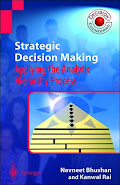
10. Your book (“Strategic Decision
Making- Applying the Analytic Hierarchy Process”) talks about strategic
decision making, can you elaborate on the military based strategies of India?
When it comes to Strategy at the
national level, there are key inputs that are essential – National Interests.
India’s national interests are not very clearly articulated in an existing
national level document. So we are left with the written document that is our
Constitution to base upon the military or national strategy. India do not have
a clearly articulated Grand Strategy as well. Further on Indian strategic
thought, Tanham’s 1992 essay was not very positive https://www.rand.org/pubs/reports/R4207.html (although it has seen many rebuttals).
My book talks about a technique to
convert qualitative inputs of experts into quantitative rankings the (analytic
hierarchy process) and how it has been and can be applied for strategic
decision making. For example recently we used AHP to prioritize national
security requirements for India. Please see http://www.indiandefencereview.com/news/indias-national-security-a-view-from-global-structural-changes/
*****

